Research achievement(选填,风格可以调整) 1) Radioactive wastewater treatment technologies and equipment INET’s research on radioactive wastewater treatment covers the entire stretch from fundamental research to industrial applications, including key technologies, materials and equipment. A series of technical packages have been formed. Engineering demonstrations completed at several nuclear facilities have shown the excellent results, i.e. radioactive decontamination efficiency improved by one to several orders of magnitude. These demonstrations have also shown the advantages in reducing secondary waste production and also in saving the costs of investment and operation. These achievements were awarded the First Prize of the Beijing Science and Technology Progress Awards in 2019, and the First Prize of the China Nuclear Energy Association’s Science and Technology Progress Awards in 2018. The series of integrated systems for treating radioactive wastewater adopts a modular design and is configured based on the characteristics of the wastewater source. It can achieve near zero discharge of nuclides (excluding tritium) from nuclear power plants and minimize radioactive solid waste. It can serve in many situations, such as nuclear power plants, decommissioning of nuclear facilities, and national nuclear emergency. Some main achievements: 1) a comprehensive and systematic technical system for radioactive wastewater treatment using membrane technology has been constructed, and an innovative refining treatment using electro-driven membrane has been proposed, which can achieve near zero discharge of nuclides (except for tritium) for the radioactive wastewater from nuclear facilities. Developed precision processing core equipment and passed product identification in the nuclear industry; For the first time, a demonstration for radioactive wastewater treatment using membrane technology has been established in a nuclear power plant in China, providing a new means for deep purification of radioactive waste. 2) A series of adsorption materials for highly selectively adsorbing radioactive nuclides (Sr, Co, Cs, Ag) have been developed, which can efficiently remove target nuclide ions from high salty radioactive wastewater. An industrial production line for adsorption materials has been established, and the prepared adsorption materials have been applied to multiple nuclear facilities, providing support for nuclear power plant operation, nuclear accident emergency response, and nuclear facility decommissioning. 3) Several membrane materials have been developed, such as reverse osmosis membranes with high retention for nuclide/boron, reverse osmosis membranes for nuclide/boron separation, adsorptive membranes for colloidal nuclides removal, hydrophobic membranes for membrane distillation, nanofiltration membranes for monovalent/multivalent salt separation, and ion exchange membranes for organic matter/salt separation. These membrane materials can not only be used for the radioactive wastewater treatment, but also for industrial wastewater treatment. 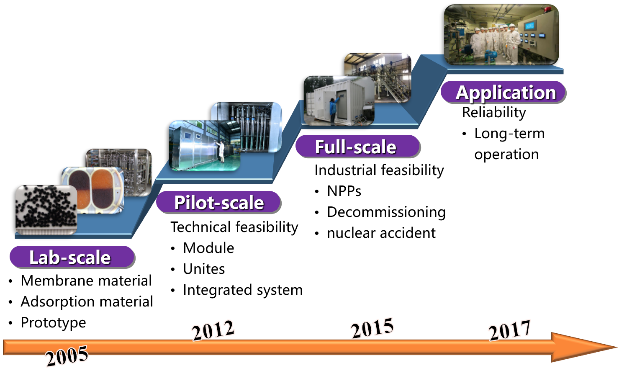
Technology and component R&D of radioactive wastewater treatment 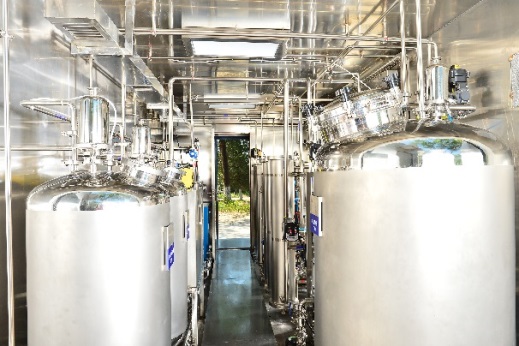
Mobile treatment device for radioactive wastewater 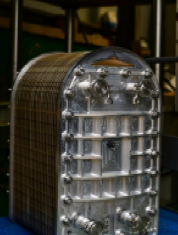
Industrial scale module for radioactive wastewater refining treatment 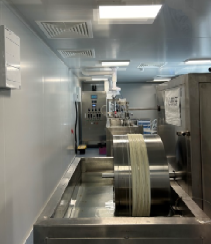 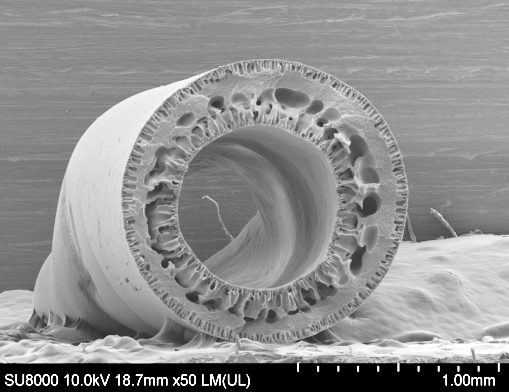
Preparation and SEM photo of hollow fiber membrane 2) Nuclear Air Purification and Process Gas Treatment INET’s research on nuclear air purification and filter performance testing covers fundamental theory, key technologies, equipment and devices, and engineering applications. Detection methods and the related devices developed at INET have been adopted by the National Standard, i.e. the sodium flame method, the quasimono dispersed counting method, the first nuclear-class high-efficiency air filter in China, the first nuclear-class demister and its performance detection device in China, radioactive gas waste purification devices for spent fuel transportation, activated carbon for radioactive inert gas retention and so on. Related achievements have been applied to nuclear power plants and have received several awards from industrial to provincial and ministerial. Based on the technical basis above mentioned, INET has developed the first high efficiency testing system for mask sealing in China in 2007. The products have been installed at the National Inspection Centers such as Beijing Medical Device Inspection Center and Guangdong Medical Devices Quality Surveillance and Test Institute, serving the needs from public health protection such as SARS and COVID-19. 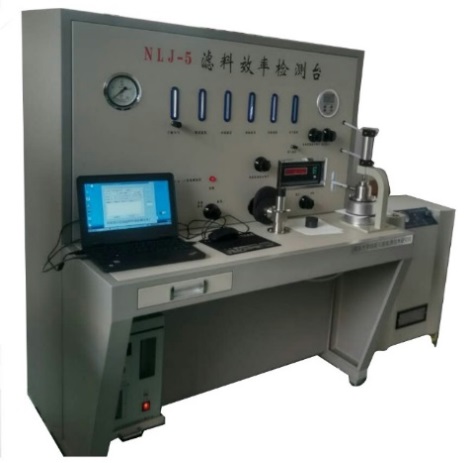
Efficiency testing device for nuclear class high-efficiency filtering materials 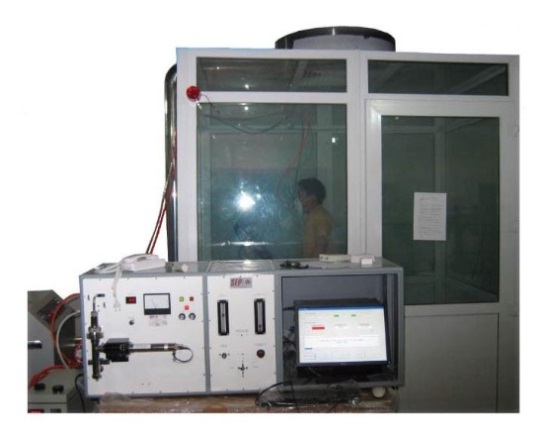
Sealing testing system for masks 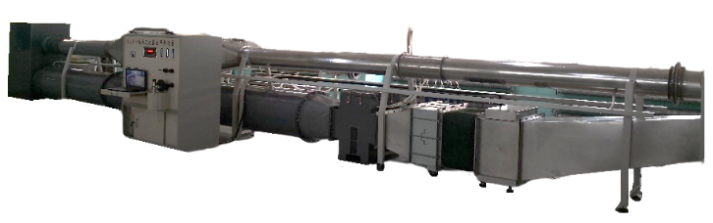
Performance testing device for high efficiency filter 3) Ionizing irradiation technology for environmental pollution control We’ve looked into the radiation degradation characteristics and mechanisms of typical pollutants in a variety of industrial wastewaters, such as polycyclic aromatic hydrocarbons, antibiotics and other refractory toxic organic pollutants using ionizing irradiation technology, and have developed and commercialized advanced treatment technologies for textile dyeing wastewater and harmless treatment technologies for antibiotic fermentation residue by ionizing irradiation. In October 2012, China's first pilot test using a self-shielded electron accelerator to treat cyanide-containing wastewater was carried out in Lianyungang, Jiangsu Province. In October 2016, China's first demonstration project on advanced treatment of industrial wastewater from textile dyeing by electron beam irradiation (2,000 m3/d) was established in Jinghua, Zhejiang Province. In May 2018, Tsinghua University took the lead in formulating the Specification of an Electron Beam for Textile Dyeing and Papermill Wastewater Treatment (T/CNS 8-2018). In June 2020, a plant for textile dyeing wastewater treatment by electron beam, the largest treatment project of its kind in the world, was built in Jiangmen City, Guangdong Province, with a daily treatment capacity of 30,000 tons, which makes China one of the leading countries in the world in terms of electron beam irradiation technology for industrial wastewater treatment, marking the technology’s use for large scale commercialization. In March 2023, the first advanced treatment of coking wastewater by electron beam radiation was established in Tangshan, Hebei Province in China. 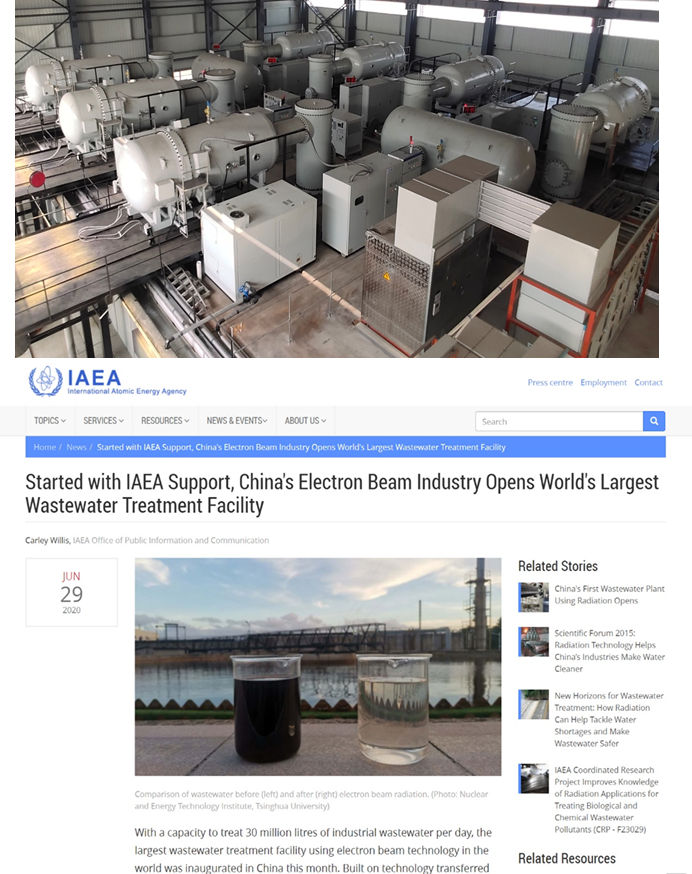
Treatment unit of electron beam radiation for dyeing wastewater and the special report about this project in the official website of IAEA The technology provides a new option for the advanced treatment of refractory industrial wastewater in China. More studies are required to investigate the application potential of electron beam radiation in the field of environmental protection. 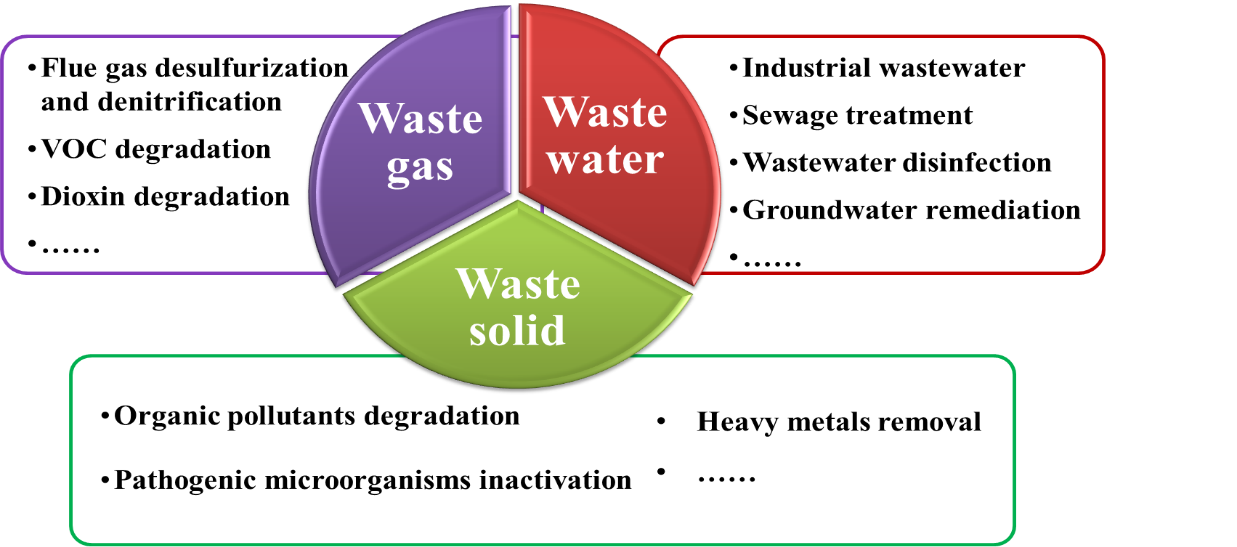
4)Radioactive waste cementation Research has been conducted on the solidification of spend resin and organic liquid waste, and a special high-efficiency cement solidification formula has been developed and applied to nuclear power plants and nuclear facilities. With the support of National Natural Science Foundation of China, the solidification mechanism and theoretically were explored to guide the optimization of the solidification formula. The nuclear safety standard “Management of Radioactive Waste from the Use of Radioactive Material in Medicine, Industry, Agriculture, Research and Education”, which was drafted by the research group, has been approved to released. |
