INET researchers developed a high-fidelity dynamic simulation model to characterize and optimize the cold-end system of small modular reactor nuclear power plants, and to evaluate its contribution to operational flexibility and safety performance. The work has been published in Nuclear Engineering and Design.
Xin Wang | INET news
June 2026
As renewable energy penetration increases, future power grids require nuclear power plants to provide greater operational flexibility. Small modular reactors (SMRs), with inherent advantages in modularity and power regulation, are promising candidates for flexible clean power supply. However, the role of the cold-end system in supporting SMR flexibility remains insufficiently understood.
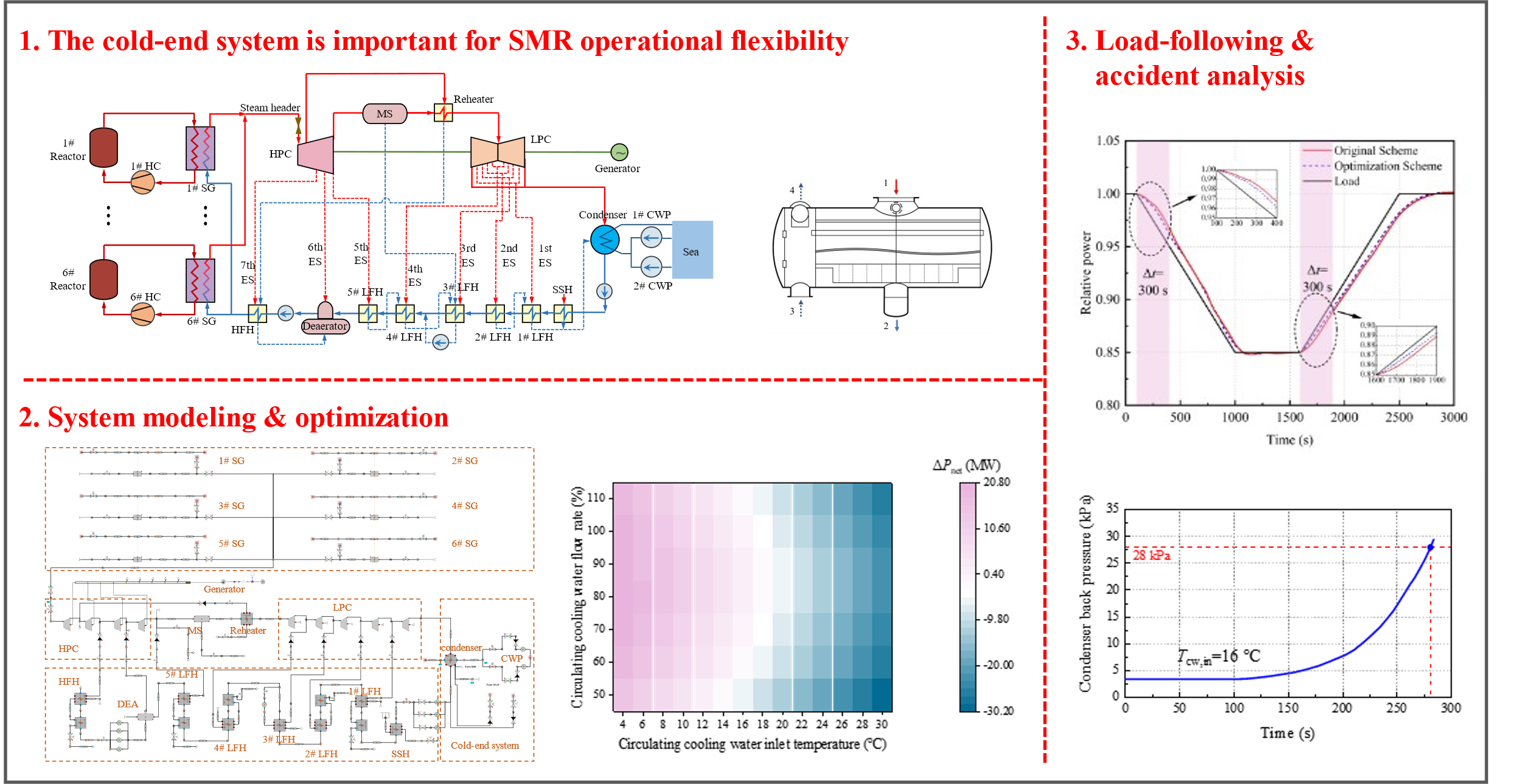
To address this gap, INET researchers developed and validated a high-fidelity Apros model of a six-module SMR nuclear power plant, and systematically investigated the effects of cold-end parameters on condenser and plant performance. Taking net electric power as the optimization objective, the study identified optimal circulating cooling water flow rates under different inlet temperatures and proposed a load-following assistance strategy based on cooling-water flow regulation. The work also analyzed circulating cooling water pump trip accidents, providing technical insights for cold-end optimization, operational flexibility enhancement, and safety assessment of SMR nuclear power plants.
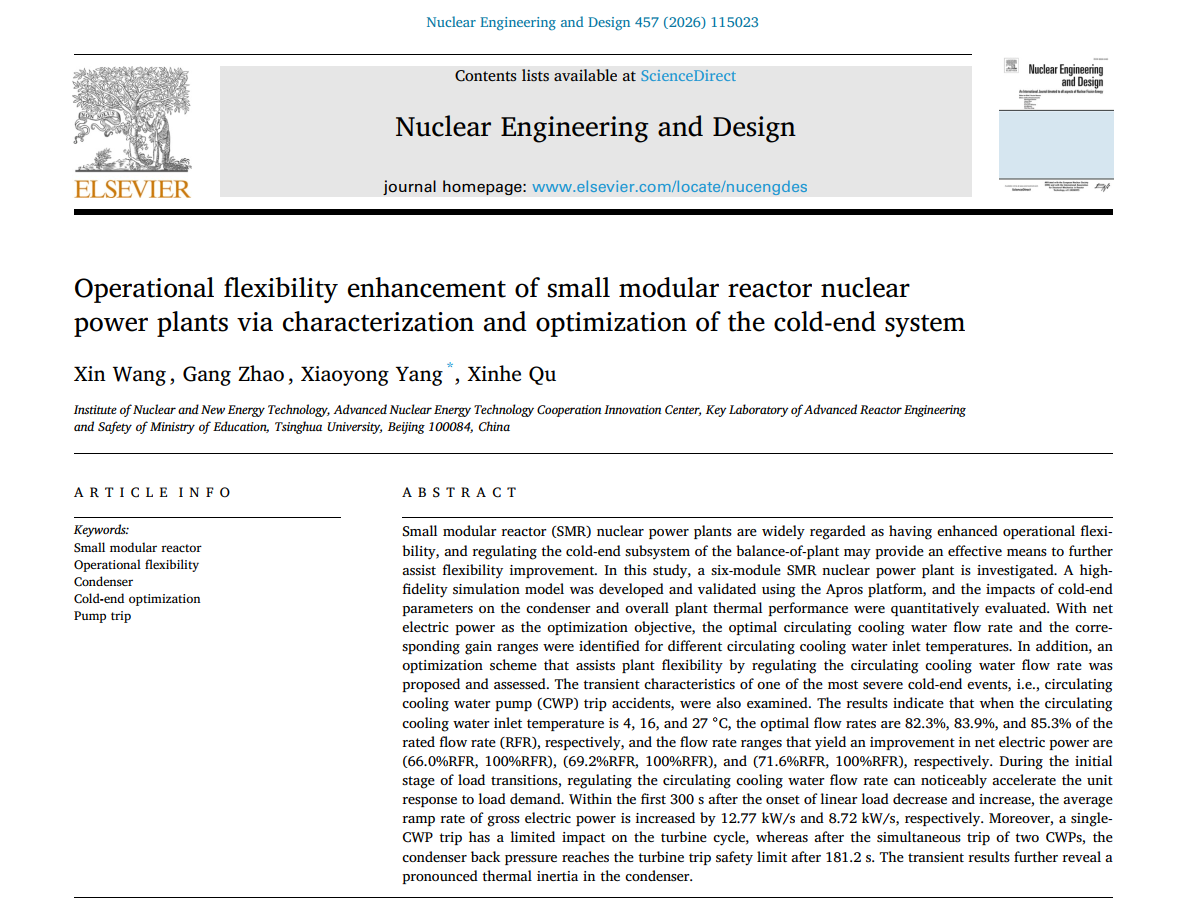
Title and abstract of the paper
This study investigates the potential of cold-end system regulation to enhance the operational flexibility of small modular reactor (SMR) nuclear power plants. A high-fidelity Apros dynamic simulation model was developed for a six-module SMR plant, and the effects of circulating cooling water inlet temperature, circulating cooling water flow rate, and condenser tube plugging ratio on condenser behavior and overall plant thermal performance were systematically evaluated. Taking net electric power as the optimization objective, the optimal circulating cooling water flow rates under different inlet temperatures were identified, and a cold-end-assisted load-following strategy based on cooling water flow regulation was proposed. The results show that appropriate reduction of circulating cooling water flow rate can improve net electric power and accelerate the unit response during load transitions. In addition, transient simulations of circulating cooling water pump trip events reveal the dynamic safety characteristics of the cold-end system and the pronounced thermal inertia of the condenser. This work provides useful insights into cold-end optimization, flexibility enhancement, and safety assessment for SMR nuclear power plants.
Link to access the full paper:
https://doi.org/10.1016/j.nucengdes.2026.115023
