On April 11, Her Royal Highness (HRH) Princess Maha Chakri Sirindhorn of the Kingdom of Thailand visited the Institute of Nuclear and New Energy Technology (INET) at Tsinghua University. During the visit, she toured the High Temperature Gas-cooled Reactor (HTGR) testing facilities and the Laboratory of Nuclear Technology & Application. Bai Benfeng, Vice President of Tsinghua University, and Shi Lei, Dean of INET, received the delegation and accompanied them on the tour.
Princess Sirindhorn has visited Tsinghua University on multiple occasions and was conferred the title of Honorary Professor of the University in 2024. Over the years, she has vigorously promoted people-to-people and cultural exchanges, as well as educational, scientific and technological cooperation between China and Thailand. She has made outstanding contributions to the enduring friendship between the two nations. On behalf of Tsinghua University, Vice President Bai Benfeng extended a warm welcome to the Princess on her return visit.
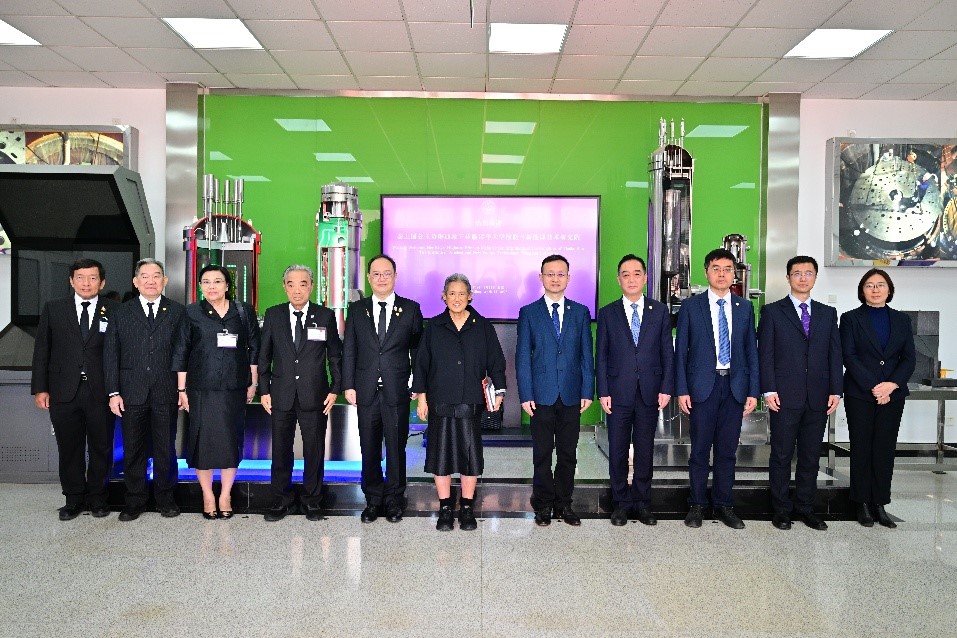
During the visit at INET, the Princess toured the 10MW High-Temperature gas-Cooled Test Reactor (HTR-10), the Advanced Reactor Engineering Laboratory, the HTR-PM600s Simulator, and the Nuclear Technology & Application Laboratory.
Prof. Wang Haitao, Deputy Director of INET, briefed the Princess on the institute’s R&D in advanced reactors, including HTGRs and the Tsinghua High Flux Reactor (THFR). His presentation highlighted the technological features, core advantages and commercial application prospects of HTGRs.
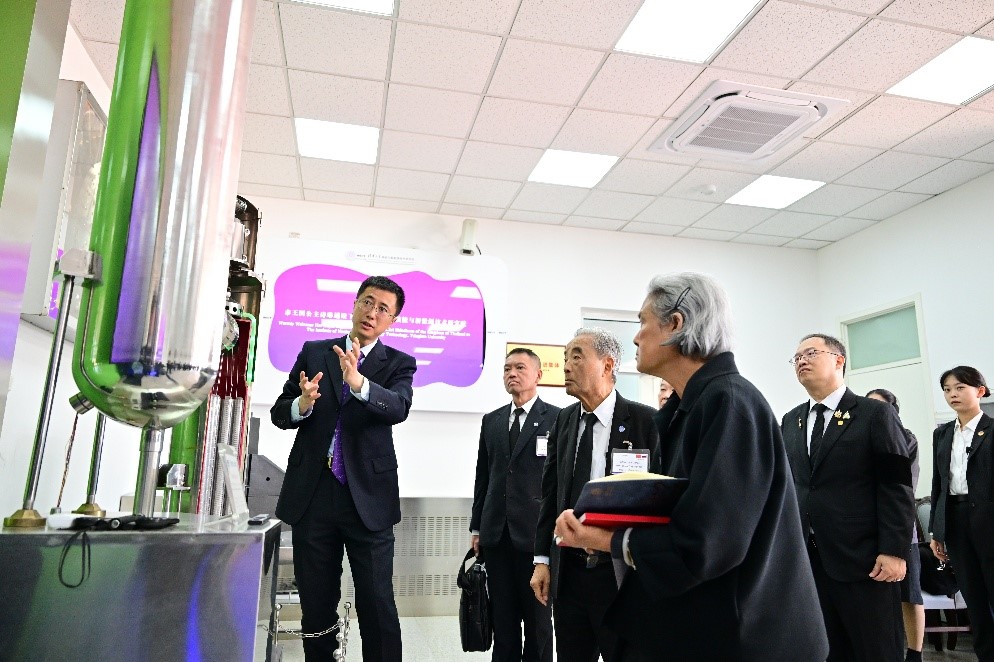
The HTGR technology, developed primarily by INET of Tsinghua University, is internationally recognized as a fourth-generation advanced nuclear energy technology. Its core strength lies in inherent safety: even in the event of a complete loss of cooling, the reactor can maintain a safe state without any human intervention, thereby preventing core meltdown and massive release of radioactive materials. The technology boasts broad commercial prospects in areas such as high-efficiency power generation, combined heat and power (CHP), and high-temperature nuclear hydrogen production.
China’s HTGR technology has achieved leapfrog development, progressing from a test reactor to a commercial nuclear power plant (NPP). In 2000, the world’s first 10 MW pebble-bed modular High Temperature gas-cooled test Reactor (HTR-10) was completed at INET, laying a solid technological foundation. Building on this success, construction of the Shandong Shidao Bay High Temperature gas-cooled Reactor - Pebble-Bed Module (HTR-PM) Demonstration Power Plant began in December 2012. By the end of 2023, it was successfully brought into commercial operation, making it the world’s first fourth-generation commercial NPP. This milestone demonstrates that China has reached a world-leading level in the R&D of fourth-generation nuclear energy technology.
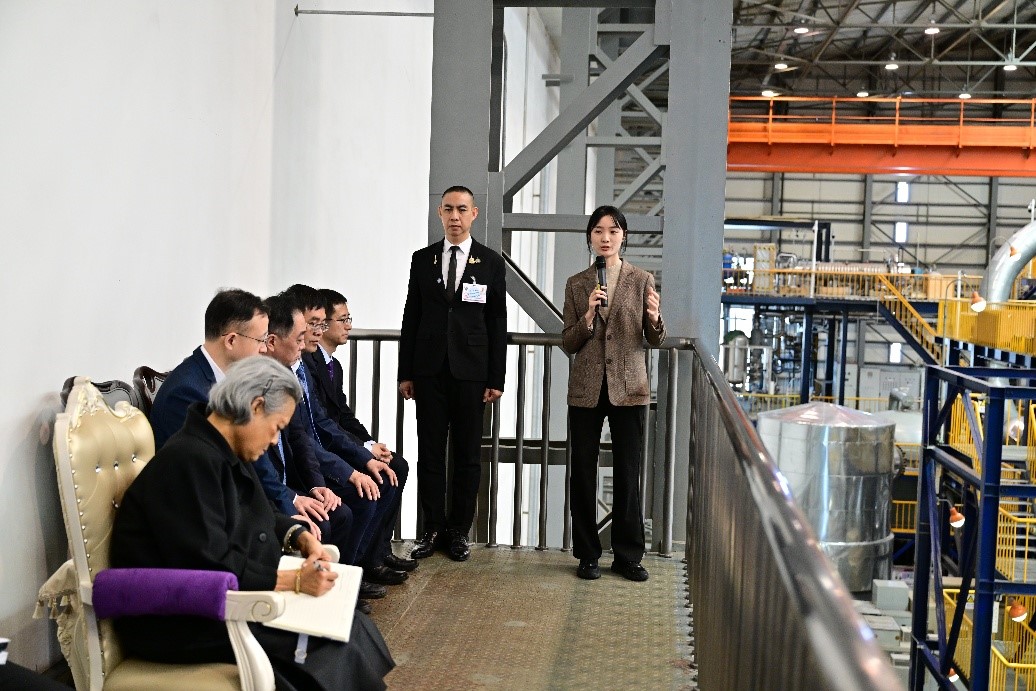
The scaleup of HTGR technology from the experimental reactor (HTR-10) to the commercial demonstration plant (HTR-PM) was by no means an easy task, as it required rigorous experimental verification of the HTR-PM's key systems and components. To this end, INET constructed the "HTR-PM Engineering Laboratory." The Princess visited the laboratory to examine key equipment and engineering validation test platforms, including the HTR-PM helium loop, helium blower, fuel handling system, and spent fuel storage system. This provided her with a comprehensive understanding of China’s breakthrough in transitioning HTGR technology from an experimental reactor to a commercial nuclear reactor.
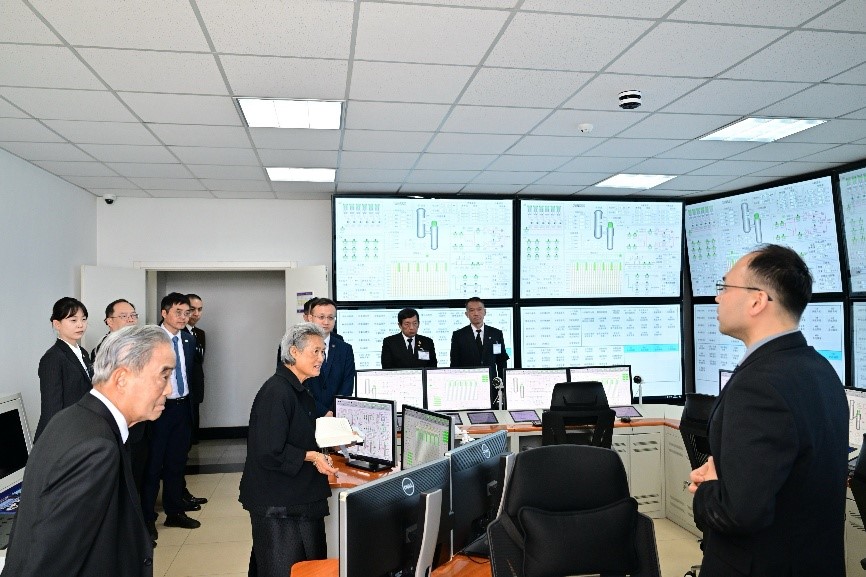
Following the successful commercial operation of HTR-PM, the commercialization of HTGR technology has accelerated. In August 2024, the State Council of China approved the world’s first integrated nuclear energy utilization project coupling HTGR with Hualong One. The first phase plans to build two Hualong One pressurized water reactor units integrated with a single 600 MW HTGR unit (HTR-PM600s). Once completed, the complex will supply large-scale, high-quality, low-carbon industrial steam to a petrochemical base in Lianyungang, playing a pioneering and demonstrative role in accelerating the green and low-carbon transformation of the energy and chemical industries. To gain a deep understanding of the HTR-PM600s, the Princess later visited the HTR-PM600s Simulator developed by INET.
Afterwards, the Princess toured the Nuclear Technology and Application Laboratory, the birthplace of the "Cobalt-60 Container Inspection System". This system was developed in 1999 and turned out to be the first scanner put into operation in China, followed by the successful development of a series of advanced products. Over the years, these systems have been widely deployed across customs, transportation, and security sectors, both domestically and internationally, yielding significant economic and social benefits.
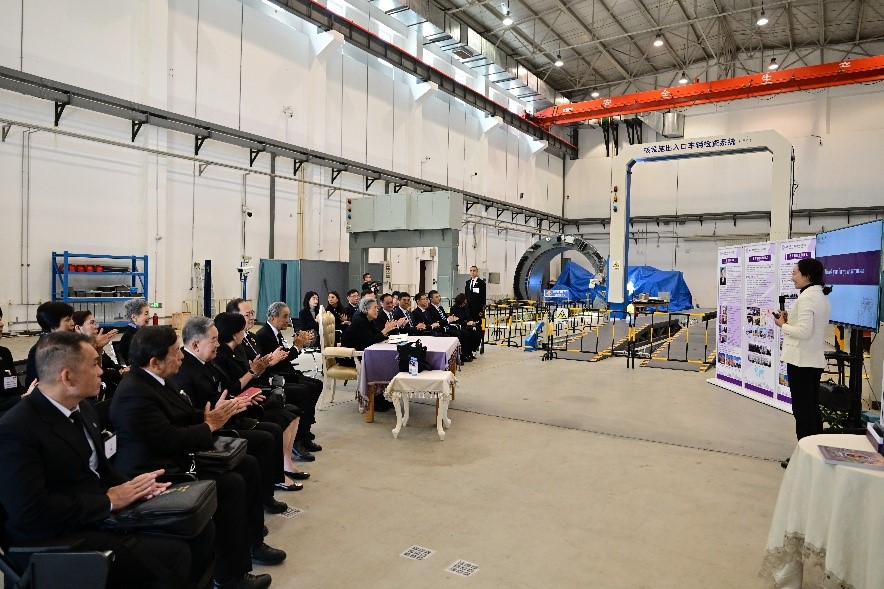
During the tour, the Princess paid close attention to the briefings on the facilities presented by INET experts, and engaged in technical discussions with them. She was deeply impressed by the leading role of China's HTGR technology among the world's fourth-generation nuclear energy systems. The Princess also applauded INET researchers for independently developing the HTGR nuclear measurement system.
The visit was also attended by Kasama Suebwises, Ambassador attached to the Ministry of Foreign Affairs of Thailand, Chatchai Viriyavejakul, Ambassador of Thailand to China, Wu Jun, Counselor at the Ministry of Foreign Affairs (MFA) of China, and other representatives from Thailand, the Chinese MFA, and Tsinghua University.
